EPA Proposal: A National Model for Privately Owned Wells
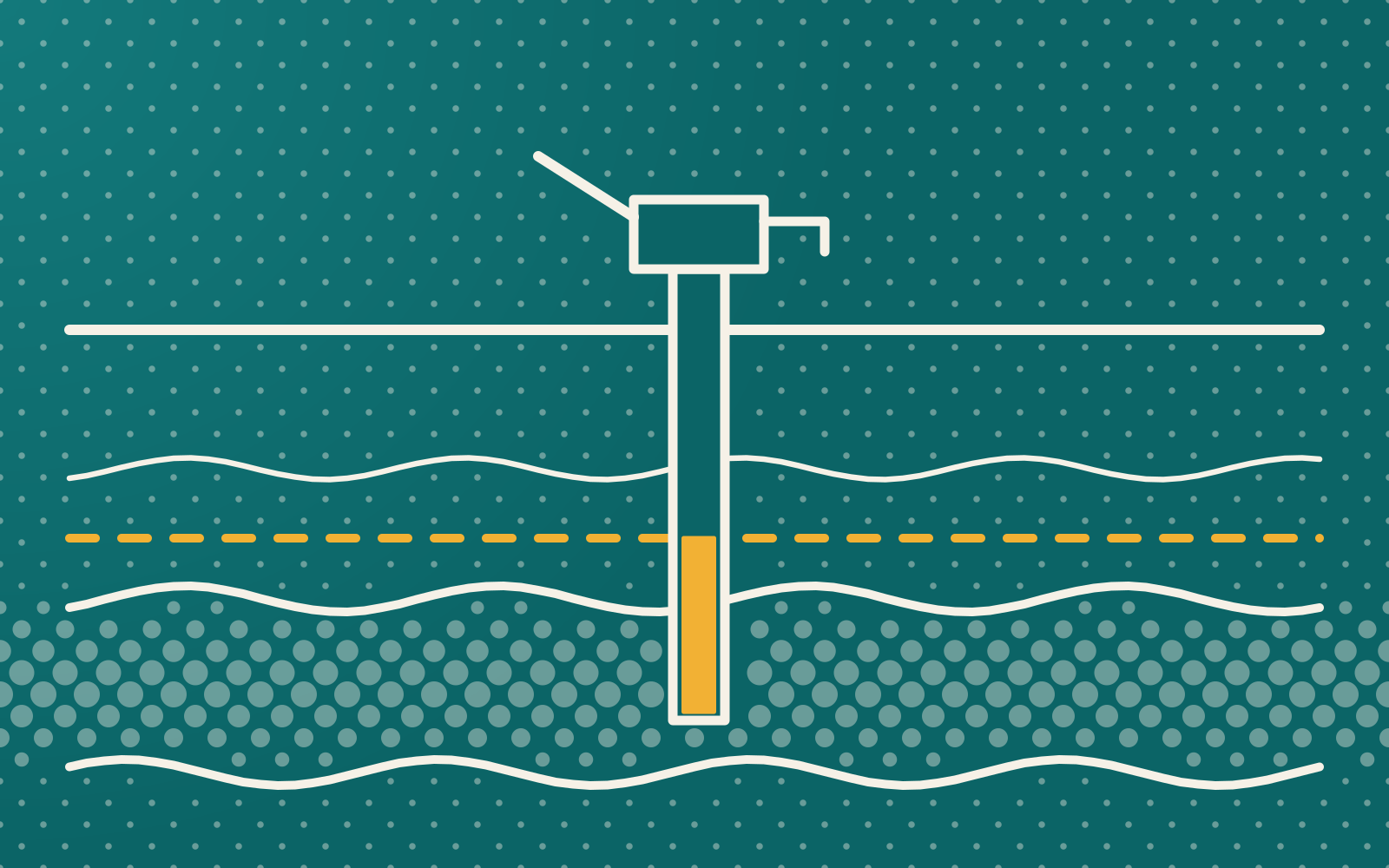
The IIBHB, under its earlier name International Institute of the Bengal Basin (IIBB), submitted this project narrative to the US Environmental Protection Agency. It proposes training and technical assistance for owners of private wells, developed in the San Francisco Bay Area as a national model. Rash B. Ghosh, PhD, is the principal investigator. The narrative is not dated.
Project Narrative
Technical Training to Develop a National Model For Privately Owned Wells to Improve Water Quality Using Research Conducted in the San Francisco Bay Area
By International Institute of the Bengal Basin (IIBB)
1248 Ashby Avenue, Berkeley, CA 94702,
P.O.Box: 11553, Berkeley, CA 94712
USA
Phone No : 001-510 575 5112
Web : www.iibbhb.org
http://www.nvo.com/ghosh_research
1. Project title
Technical Training to Develop a National Model for Privately Owned Wells to Improve Water Quality of the San Francisco Bay Area Counties of California
2. National Priority Area
Area 4: Training and Technical Assistance for Private Well Owners to Help Improve Water Quality
3. Name of applicant
Rash B. Ghosh, PhD [Founder of IIBB]
International Institute of Bengal Basin (IIBB)
P.O.Box: 11553, Berkeley
CA 94712, USA
4. Key personnel and contact information (i.e., e-mail address and phone number)
| Name | Role |
|---|---|
| Rash B Ghosh, PhD | Principal Investigator and Authorized Representative |
| Derek Whitworth PhD | Major Co-Investigator |
| Rosalie Say MS. | Major Co-Investigator and Administrative contact |
| Nabanita Saha PhD | Major Co-Investigator |
| John Paulin Ph.D | Major Co-Investigator and Technical writer and Editor |
Contact information for all Key personnel:
P.O. Box: 11553, Berkeley, CA- 94712
Phone no: 001- 5105755112
Email Director@iibhb.org
Associate member of the organization and remain involve in this project.
| Name | Role |
|---|---|
| Jason Ravitz PhD | Education Director |
| Felix Motzoi PhD | Technical Trainer |
| Ric Eye M.S | Technical Trainer |
| Dawn Bravo | Technical Trainer |
| Nicolas M.S | Technical Trainer |
| Angela Cheng | Technical Trainer |
5. Total project cost (specify the amount of federal funds requested, the non-federal cost-share/match, and the total project cost)
| Amount | |
|---|---|
| Federal funds requested | |
| Non-federal cost share/match | |
| Total Project Cost |
B. Executive Summary
Water is an invaluable natural resource, yet a global water crisis is looming due to overuse and abuse of water resources by industrial and agricultural processes, which have increasingly taken their toll on our water supplies. In America, the surface water is almost completely destroyed, and the groundwater has been severely depleted and contaminated by industrial and agricultural pollution. These developments have had a terrible impact on privately owned wells which, historically, were not contaminated. In conformity with the requirements of National Priority Area 4, and based on techniques and methods to be developed in the counties of California’s San Francisco Bay Area, we will provide a model for training and technical assistance for the more than 30 million Americans whose water supplies do not come under the authority of the Safe Drinking Water Act (SDWA). These clients include private drinking water well owners, home owners, and groups of home owners who share a single drinking water supply among fewer than twenty five people or among 15 or fewer service connections.
Private wells do not come under the protection of the SWDA, yet the owners are often wary of seeking guidance or help from governmental agencies, and they do not feel comfortable with inspectors on their property. However, this mistrust, compounded over time, has led to adverse health effects for the consumers of such water which has often suffered contamination due to circumstances over which they have no control. Those especially vulnerable include children, young mothers, and seniors. The EPA’s approach of assisting small private well owners is a thoughtful one. This approach may build bridges of understanding and trust between such small well owners, their community, and the state and federal authorities with jurisdiction over water quality. This initiative to bring a nonprofit to conduct training on well maintenance, protection, and toxics reduction is an excellent idea and will lead to the public’s increased understandings of wells and the environmental setting of their wells.
Our preliminary inquiries with the private well owners in the communities of California’s San Francisco Bay Area clearly indicate that people are in desperate need of help to protect their water and reduce contamination, and they are keenly interested in the prevention of water related illnesses and avoiding toxics in their water supply. Due to their limited resources, small private well owners are among the most helpless community members. Financial hardships and socioeconomic conditions create their own difficulties, and access to necessary knowledge and information is often very limited. These citizens should be assisted in overcoming these difficulties through free training and consultation, and accessible, easily understood documentation disseminated in a variety of traditional and electronic media, including booklets, brochures, postings on websites, distance learning, streaming video, podcasts, community television, and other media. This process will make available instruction to required standards of technical information and training,which will be of great benefit to this neglected community.
We have an excellent team supported by Nobel Laureates from Stanford and the University of California, we have people from a variety of ethnic and economic backgrounds including PhDs and others with graduate education. Our team members have between them much experience inteaching and training, and they are well informed on drinking water issues as volunteers at our nonprofit, the International Institute of the Bengal Basin (IIBB), an organization devoted to the remediation of toxics in ground and surface waters in California, South Asia, and beyond.
C. Work plan
1) National Priority Area
1.1 Our proposal is in response to the US-EPA announcement regarding National Priority Area 4 and chiefly concerns training and technical assistance to improve drinking water quality for: owners of private drinking water wells; home owners; groups of home owners sharing a single drinking water connection for fewer than 25 people; and for residents who draw their water from a single source providing 15 or fewer service connections. Water is our most important natural resource; it sustains human life and all life on the planet. Yet, this resource is threatened. There is a water crisis, global in scale, and the U.S. is not exempt. Approximately, half of the people in the United States use ground water for drinking water, and at least 30 million Americans obtain this water from private wells. However, these private wells and small service connections do not come under the authority of the Safe Drinking Water Act (SDWA). Additionally, private well owners face many challenges in securing safe drinking water, and the protection of private intake wells does not come under local or national regulations. As a consequence, well owners often have difficulty obtaining the assistance they need to keep their wells in good working condition and to protect and maintain a high quality water supply. Because they have no directions to follow and as a result of circumstances that are no fault of their own, these well owners are frequently vulnerable to serious health hazards, including waterborne diseases and illnesses arising from other forms of contamination. When they become aware of such problems, they often do not know whom to contact for the professional guidance they deserve. Lack of professional advice and timely information can lead to serious health consequences for citizens who use water from small supply systems, a problem that could have been avoided had their water issues received proper attention before the damage was done. The technological means and the expertise are available, we should put it to more effective use, and the authorities equipped to deal with these matters should step in and help. Therefore, we appreciate the concern of the US-EPA officials, their practical approach, their profound appreciation of the significance of these problems, and their understanding of the needs of consumers of small supply water systems in urban and rural areas throughout the US states and territories. Technical assistance must be made readily available on all aspects of private ownership, including well construction, operation, and maintenance as well as on the testing of soil and water (both of which should be done with the informal guidance of local and state health departments in conjunction with other relevant agencies). These steps, along with contact information, are necessary to address local groundwater quality concerns, as are instructions on well emergency procedures, best practices for well maintenance. Literature and brochures must be prepared and provided to well owners, and the information provided must be kept up-to-date in order to keep in step with new scientific and technological developments.
Rationale for choice of venue location
Our project will provide training and technical assistance to improve water quality in privately owned wells and small supply water systems and will be based in California in the counties of the San Francisco Bay Area: San Francisco, San Mateo, Santa Clara, Solano, Alameda, and Contra Costa. We have chosen these California Bay Area counties as the location for our model for the following four reasons: 1) California is the most populous state in the country; 2) it has a reliable dry season during which rainfall is limited; 3) its small supply water systems must deal with toxicity issues including arsenic contamination; and 4) there is a statewide groundwater shortage. Additionally, we assume that, taken together, the problems confronting California’s private well owners will be more diverse and more complicated than in other states. To address the project further, we will begin our discussion with an overview of California’s water supply system, followed by a brief review of existing well structures and conditions in California. We will then provide a description of the methodology to be implemented during training and the technical assistance that will be available for private domestic well owners and for small supply water systems. If we are selected, we will prepare this information for print publication as the “Private Well Owners’ Guide” for printed distribution in all 50 states and U.S. territories and, additionally, in other web and multimedia formats such as podcasts, streaming videos, Television Broadcast (we already have an agreement with the local community media broadcasters), instructional DVDs, webinars, distance learning, and dissemination through similar media, as appropriate.
Overview of the water supply system in California
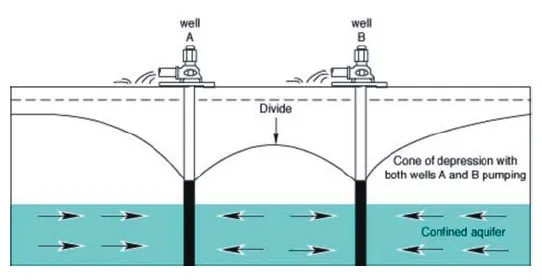
California’s interconnected water system serves over 30 million people and irrigates over 568,000 acres of farmland. The state’s water supply comes from two chief sources. First, there is Surface water, or water that travels or gathers on the ground fed by rain and snowmelt, including rivers, streams, and lakes. The second main water source consists of ground water, or water derived from beneath the surface of the earth. There are two types of groundwater classification recognized by the state of California. The first, subterranean streams, are defined as flowing streams of underground water. The second, percolating water, is defined as non-flowing underground water. Groundwater is a critical element of the California water supply, Californians use about 15 billion gallons of ground water per day, and its use increases during drought conditions. Over 16 million Californians get at least part of their drinking water from groundwater, from both public supplies and private domestic wells. Over 11 billion gallons of groundwater per day are used for agricultural irrigation, helping to make California’s agricultural economy one of the largest in the United States. Nevertheless, the state has few rules governing groundwater. Some basins limit pumping through management plans or court rulings, although in most of the state, anyone can build a well and pump unlimited amounts. However, excessive pumping has consequences, and rural residents who rely on smaller wells for drinking, cooking, and bathing are feeling the effect. Thus, some farmers and urban districts are now seeking solutions to prevent groundwater overuse1. As a precautionary measure, a water supply well should be located so that the water supply from the well is maximized and the potential for groundwater contamination of the well is minimized. Likewise, as shown in the diagram depicted below, the well should be located at a sufficient distance from other water supply wells so as not to cause well interference. To avoid surface contamination from entering the well, the casing should extend above the ground surface, the well should be located on the highest ground possible, and the ground surface at the wellhead should drain away from the well2.
A modern water well is an expertly engineered and constructed method of delivering groundwater for drinking, irrigation, and other purposes. And for this Wellowner.org is an excellent resource for getting information related to private water well systems and groundwater. Wells can be divided in three classes: Drilled wells, Driven wells and Dug wells, and brief descriptions are provided below:
Drilled wells are constructed by either cable tool (percussion) or rotary-drilling machines. Drilled wells can penetrate to depths of more than 1,000 feet and, in the case of drilling through unconsolidated material, require the installation of casing and a screen to prevent collapse and the inflow of sediment. To prevent contamination by water draining from the surface downward around the outside of the casing, the space around the casing must be sealed with grouting material consisting of either neat cement or bentonite clay. Driven wells are constructed by driving a small-diameter pipe into shallow water-bearing sand or gravel. Usually, a screened well point is attached to the bottom of the casing before driving. These wells are relatively simple and economical to construct, but they can tap only shallow water and, because they are not sealed with grouting material, they are easily contaminated with nearby surface sources. Hand-driven wells usually are only around 30 feet deep, but machine-driven wells can exceed depths of 50 feet. Historically, dug wells were excavated by hand shovel to below the water table until the incoming water exceeded the digger’s bailing rate. The well was lined with stones, bricks, tile, or other material to prevent collapse, and was covered with a cap of wood, stone, or concrete tile. Because of the construction method, bored wells can go deeper beneath the water table than can hand-dug wells. Dug and bored wells have larger diameters and expose larger areas of the aquifer. These wells are able to obtain water from less permeable materials, such as very fine sand, silt, or clay. The disadvantages of this type of well are that they are shallow and lack continuous casting and grouting, which makes them subject to contamination from nearby surface sources, and they go dry during periods of drought should the water table drop below the well bottom3. The Standard well designs include selections for the following criteria i.e. i) Drilling method and borehole diameter, ii) Casing diameter and material iii) Well depth, iv) Screen length, slot size, and material, v) Filter pack type and vi) Well completion method etc.2
Brief information concern Privately Owned Wells in California
It is reported that, as of 2010, the drinking water for about 1.4 million state residents comes from over 600,000 private domestic wells. Well owners obtain permits from local environmental health agencies or local water districts before construction, modification, or destruction takes place. Although the State of California does not issue well construction permits, the Department of Water Resources (DWR) and the State Water Resources Control Board (SWRCB) have established well construction standards (Well Standards). Usually, private domestic wells are either of shallow or intermediate depth. The domestic wells must be drilled by a licensed contractor supervised by a qualified engineer, and must meet applicable local and/or state well standards. Each well location is chosen based on the environmental setting of the well facility and its vicinity and its ability to meet the needs of private well owners. Furthermore, well sites should be free of potential sources of contamination, surface run off must be drained properly, and sufficient area surrounding the well should be kept free of contamination so as to remain safe for percolation and recharging.
In general, the commonly observed water contaminants (microbe, minerals, pesticides, herbicides, arsenic, organic chemicals such as VOCs, radioactive elements etc.) are briefly summarized below4:
- Microbes (viruses and bacteria) can come from sewage, septic systems, animal operations, and wildlife.
- Minerals, including salts, nitrate, and metals, can be naturally-occurring or can result from human activities on the surface.
- Pesticides and herbicides from agricultural, urban storm water, and residential uses can be found in well water. And they should not be applied to higher elevations near the well under any circumstances nor within 100 feet upstream.
- Organic chemicals (VOCs) from industry, gasoline stations, agriculture, storm water runoff, and septic systems have been detected widely in groundwater and those contaminants must be avoided.
- Radioactive elements typically occur naturally; however, human activities at the surface can release naturally occurring radioactive elements from sediments and bedrock.
1.ii. We will keep in contact state and territorial authorities such as State EPAs, water control boards, Departments of Health Services, and the appropriate authorities on the county and local levels, by phone, fax, email, US Mail, video conference calls as appropriate. Communications will commence prior to the initiation of any project in order to establish a list of contacts and to secure preliminary guidance, to gather relevant documents, and all such interactions will be on record. These connections, so established, will be kept up to date on the projects as they develop and the final results when they become available. We have already made inroads with officials of California’s Department of Health Services, Drinking Water Section.
1.iii. Conventional approaches to the cleaning and upkeep of wells are expensive, may not be attractive to private well owners, nor are such approaches user-friendly or easy to maintain in the long term. Therefore innovative approaches must be explored to provide cost-effective solutions for well owners and their limited means. Examples of such approaches include:1) Electrodialysis; 2)Solar purification5; 3) bioremediation (the use of bacteria to reduce water pollution as appropriate). In all three cases, the low cost and ease of implementation should appeal to well owners. Each of these innovative approaches show the potential to appeal to the intended audiences. Finally, in addition to these innovative approaches, traditional approaches such as the storage of rain water should be implemented more fully.
2) Providing Training and Technical Assistance on a National Basis
2.i. The applicant (PI) is well qualified and has extensive experience in this field. In addition to his nonprofit organization, the PI has a considerable number of interns, volunteers, and associates who will be assets in the training program. These human resources include many highly educated individuals from diverse economic and ethnic backgrounds, including members of a tribal community. These individuals, a number of whom have had teaching and training experience, can provide training face to face or through remote means including webinars, video, and phone consultation, as it is suited to the particular well owner. These options are useful to attract more recipients.
2.ii. Given the long history of misunderstandings between tribal communities and various levels of government, a very important concern for those seeking to provide assistance is to build and sustain trust. Without an open and sensitive relationship, little will be achieved. The PI has extensive experience working with members of tribal communities on tribally owned land in Humboldt County’s Trinity river basin, the “Celtor Chemical” Superfund site. Over the entire 6 years of the project, Dr. Ghosh served as Project Manager and the representative of the state agencies responsible for cleaning up the site with federal funding. Additionally, the nonprofit organization has a considerable number of interns and volunteers, including a Native American volunteer who would an asset in the training program both as a trainer and recruiter. Many more volunteers can be recruited from UC Berkeley at no additional cost, and we are currently investigating how our nonprofit’s affiliation with the UC Berkeley School of Public Health may be utilized to secure academic credit for their efforts. As necessary, we will work with the tribes to provide consultations in native languages. The protocols that we develop in California will serve as models for outreach to well owners in other tribal communities in the other states and in the territories.4
2.iii. The applicant has given serious consideration to how state and local regulations and policies impact the implementation of national standards and will address them as appropriate. We will work with the appropriate authorities in the states and territories, or the EPA, to identify the areas in greatest need of assistance to address the needs of the well owners, adapting to their special requirements, as needed, and technical documentation will be made available to these clients prior to the provision of actual training or technical assistance. In the fulfillment of these aims, we will develop and/or provide online and hard copy information and materials on topics of interest to private well owners, including links to state regulations impacting private wells, water rights within particular jurisdictions, and how to respond to well contamination emergencies. Secondly, we will provide information, technical assistance and training to other organizations in order to meet the special needs of well owners within their jurisdictions. Third, a toll-free, adequately staffed hotline will be at the disposal of private well owners for timely assistance and advice on private well matters. The hotline attendants will have lists of numbers for emergency consultation on specific issues and for contact with local, state, and territorial authorities. Fourth, electronic newsletters and/ social media will be utilized to provide topical or emergency information quickly to private well owners with internet access. Our approach balances the use of face-to-face/onsite techniques, and our major emphasis is hands-on training which will result in a high level of understanding and knowledge retention for participants. Face-to-face and on-site technical assistance, which includes, for example, classroom training, workshops, site visits and circuit-riders or other multi-state and/or regional approaches. However, this is always more expensive and resource-intensive, so in order to meet the special needs of clients in remoter areas most effectively in the maximum number of states and territories, we will also be offering assistance and training through remote techniques, for example, through webcasts, Television and radio broadcasting, video conferencing, hotlines, online courses, and other forms of distance learning. Fifth, with regard to members of ethnic communities who are not able to understand English, we will follow the outreach steps detailed above for tribal communities in section 2.ii. Finally, we will educate private well owners through face-to-face visits regarding potential or actual threats to their wells and provide them with contact information.
2.iv. The government agencies, the EPA grant project officer, and the appropriate EPA regional coordinators will be informed regarding the assistance provided. We will document our results through the electronic and print publication of our “Private Well Owner’s Guide” and the electronic and hard copy dissemination of other resources, including compliance strategy metrics, tools, and training materials. Electronic dissemination will include email, posting on websites, streaming video, podcasts, DVDs, and similar media. These materials will be at the disposal of private and institutional stakeholders, including the well owners, the EPA grants officer, sister agencies, intergovernmental agencies, tribal authorities, and others.
3) Environmental Results and Measuring Progress
3.i. We have an excellent team consisting of a number of PhDs and the backing of Nobel Laureates in Physics, two of whom advise our institute. We also have access to excellent scientists at UC Berkeley and Stanford University, in addition to Dr. Ghosh’s colleagues in the Cal EPA, the California Department of Health Services. Furthermore, Rosalie Say, the director of our nonprofit, the IIBB, was the training director of CIRDAP in Dhaka, Bangladesh, responsible for 14 Asian nations. Dr. Ghosh has worked for Manchester-Salford University in the UK, Jaganath University in Dhaka, Bangladesh, Stanford University, and the California DHS with health and safety with regard to water quality, including private wells, and the California EPA, where he worked on about 10 Superfund sites and was extensively involved in training, with an emphasis on drinking water resources. Derrick Whitworth, PhD, the president of our nonprofit, has over 20 years of experience working with California DHS, California EPA and DTSC, and the California Water Quality Control Boards. The findings of our highly qualified researchers will be compiled and edited by technical editor, John Paulin, PhD, who has had years of experience in writing for the sciences and humanities. He will be assisting in the interview and training processes. Dr. Paulin has had considerable experience teaching in multicultural environments, including 6 years as an instructor at U.C. Berkeley and as an ESL teacher, and his background in multimedia arts, web design, and video production will be used extensively in preparation of [electronic] material for dissemination over the web. Graphic design. Posters. The technical editor will be responsible for preparation of manual and other training materials and will be responsible for answering nontechnical program related questions. Technical matters will be answered by one of our in-house scientists.
3.ii. As indicated in Section 1.D., outputs are to be measured in terms of the benefits provide to the recipients of our training, consulting, and technical assistance services, including the operators, managers, workers, and officials of small public water systems, small private well owners, and others. Contact with the recipients of our services will be maintained throughout the project by our trainers, administrators, and scientists. Throughout the process we will have administer survey and response forms, electronically or as hard copy, through which the recipients will be asked to evaluate the effectiveness of the training, advising, or other services received. All these responses will be entered into a human resource management database which will be maintained by our administrator, and these results will be summarized and issued periodically in reports to the EPA.
Short-term outcomes, including changes in learning, knowledge, attitude, and skills, as well as intermediate outcomes, including changes in behavior, practice or decisions, will be assessed through the same means utilized to track outputs: surveys and write-ups. Long-term outcomes, changes in condition of the natural resource, must be determined through laboratory analysis; however, since we have no testing facilities, we will inform the recipients about appropriate places to secure water quality assays prior to implementation of our program and down the road for long-term results.
4) Milestone Schedule/Detailed Budget
See appendix on page 12 of this section.
5) Programmatic Capability/Experience/Community Support
5.i. Dr. Ghosh has experience working as a scientists and project manager on about 10 Superfund sites for the California DHS and the California EPA, and has extensive experience training employees and members of the public on well maintenance, private wells, the removal of toxics from water resources, and other water issues, throughout California, nationally, and internationally. Dr. Whitworth has 20 years of experience working for the California DHS, the California EPA Department of Toxics, and the California Regional Water Control Board.
5.ii. The professional activities of Drs. Ghosh and Whitworth throughout California and the Bay Area give them a deep knowledge of relevant state and local regulations relevant to both training and technical assistance. As regards training and the creation communications materials, Dr. Paulin is an experienced technical editor who has worked with engineers and scientists in many fields and has prepared many projects for the IIBB. In terms of project administration and oversight, Dr. Saha has extensive experience in project preparation and management.
5.iii. See attachments.
6) Past Performance
- No available past performance information or reporting history.
- No available past performance information or reporting history.
- No available past performance information or reporting history.
Download the original (PDF, 10 pages, 303 KB)
Footnotes
-
The original cites its reference [2] here. The PDF does not include the reference list. ↩
-
The original cites its reference [3] here. The PDF does not include the reference list. ↩ ↩2
-
The original cites its reference [4] here. The PDF does not include the reference list. ↩
-
The original cites its reference [5] here. The PDF does not include the reference list. ↩ ↩2
-
The original cites its reference [6] here. The PDF does not include the reference list. ↩