Climate, Water, and Justice in Bangladesh

Thomas Harun Hodgman delivered this keynote speech on November 18th, 2023 at Dhaka Reporters' Unity in Dhaka, Bangladesh. One week before, on November 11, Dr. Rash B. Ghosh invited him to speak at the IIBHB seminar “Buriganga’s Present Status, Environmental Injustice & Human Rights” at the National Press Club in Dhaka. Dhaka newspapers reported the seminar, among them Dainik Provat, The Daily Muktamat, Mukto Khobor, and Nabo Abhijan.
The text has been edited and shortened from its original form.
Update: as of November 2026, Thomas has been named Director of Legal Research at the IIBHB. Prior to joining IIBHB, Thomas worked as a policy analyst and strategist for Dr. Ghosh.
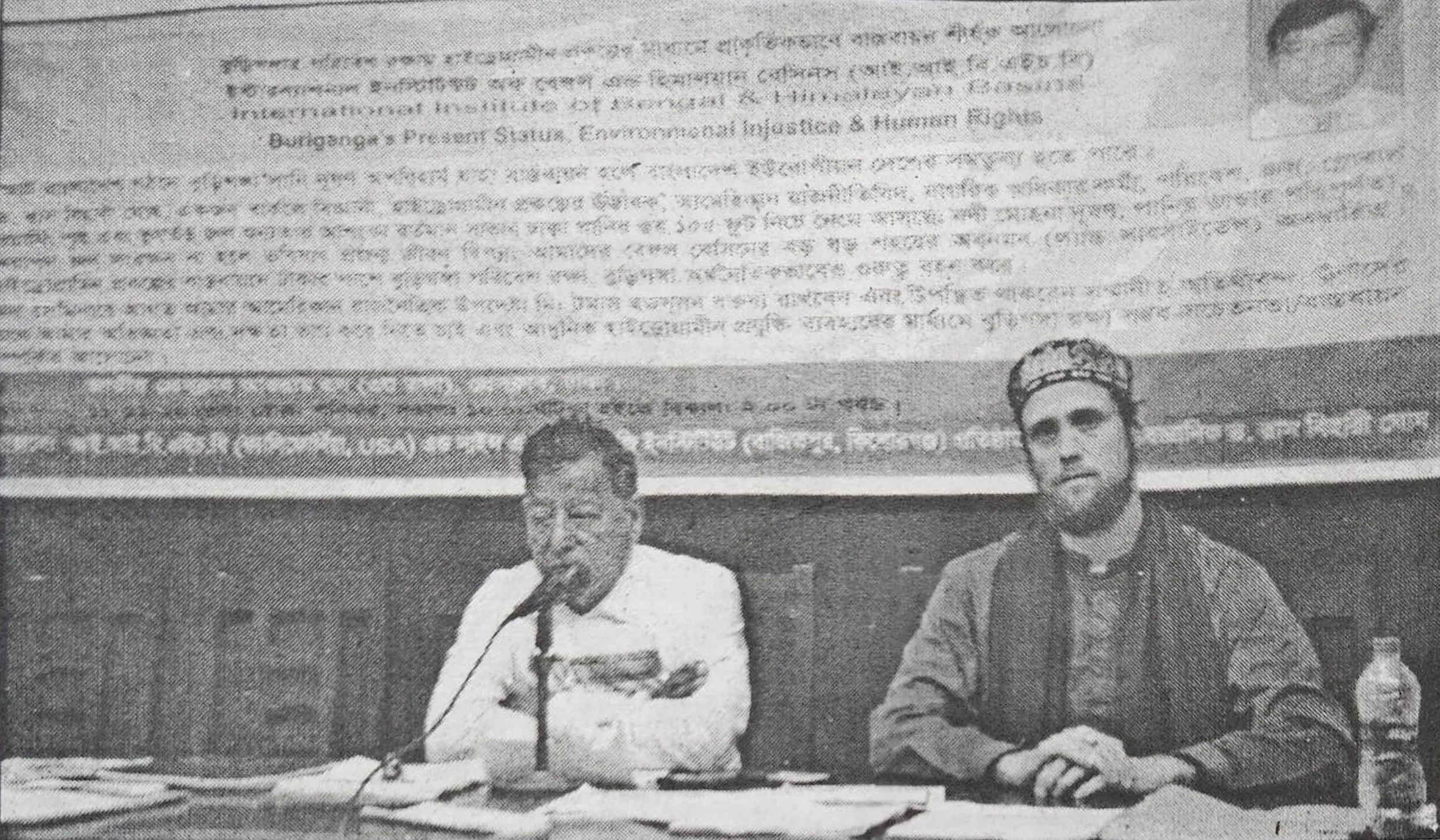
Dr. Rash B. Ghosh and Thomas Harun Hodgman at the IIBHB seminar on the Buriganga River, National Press Club, Dhaka, November 11, 2023.
I'd like to start by acknowledging that the hospitality and generosity of the Bengali people during my brief stay here have been incredible.
I only just arrived here less than two weeks ago, but I already feel at home.
My name is Thomas Harun Hodgman. I am speaking to you today as an ecologist and an educator with a decade of experience in the environmental sciences.
I earned my degree in media ecology at a top US university, UC Berkeley. I followed this with work in education, research, and analysis for a variety of environmental NGOs, including one program teaching agroecology and water harvesting with the United Nations.
This year, our planet surpassed temperature records that had not been crossed in over one hundred thousand years. We have now transgressed the majority of planetary boundaries necessary to ensure human survival, and we must immediately turn back.
The scientific estimate is that over 1 billion people will perish from climate disasters in the next century if we do not. And that we have less than 10 years to prevent many feedback loops from spiraling the planet's life support systems completely out of control.
Bangladesh, in many ways, is on the front lines of the climate crisis. On average, 1,000-2,000 migrants are arriving in Dhaka every day fleeing sea level rise on the coast. Many scientists have called this river delta the most climate impacted in the world.
At the same time, there is tremendous climate leadership here. I was saddened to hear of the recent passing of Dr. Saleemul Huq, who was a true global leader in climate justice and scientific collaboration.
We'd like to echo his advocacy for the global North to live up to its financial commitments to provide loss and damage finance for countries like Bangladesh to fund climate initiatives. Dr. Huq and Dr. Ghosh are joined in this advocacy and leadership by many others here, such as Farah Kabir, Director of ActionAid Bangladesh.
Other examples of this leadership: In 2019, Bangladesh became the first country to grant all rivers the legal status of human beings. Just last month, the climate leaders from 23 countries gathered to issue the Dhaka Declaration - a milestone resolution supporting land rights as essential to climate action. And there is much more I could add.
It has been a great honor for me to serve as chief political advisor for as accomplished a scientist as Dr. Rash Bihari Ghosh for the last five years.
His life story and career is impressive. He was the youngest member of the inner circle around Bangabandhu, a freedom fighter recognized as such in the honorable Prime Minister Sheikh Hasina's autobiography.
After the Independence War, unlike his comrades Dr. Ghosh chose to go into science, rather than politics. He earned his PhD at the University of Manchester in the 1970s, where he helped clean up the Mersey estuary - an impressive task not so different from the need to clean up the Buriganga today.
Dr. Ghosh then moved to the United States, where he began working for the California Environmental Protection Agency (EPA) in the 1980s, cleaning up Superfund sites in Silicon Valley, some of the most toxic in the world. During this time, he also became a climate scientist at Stanford, one of the most prestigious universities in the United States.
After a decade of exemplary work for the California EPA, he was passed over for a promotion, despite being recommended by his boss. He then won a lawsuit that he was turned down because he was a Bengali immigrant, setting a precedent in racial discrimination case law for the entire United States.
The late Nobel laureate, Dr. Charles Townes, the inventor of the laser, co-founded with Dr. Ghosh the IIBHB. Their work established over two decades of scientific exchange and collaboration between many of the best scientists of the US & Bangladesh - with the goal of healing & protecting the health of the Bengal & Himalayan basins.
But politics got in the way of science.
The city council of Berkeley, California brought a lawsuit against him for a petty zoning violation, perhaps in retaliation. Even when he paid a hefty sum and made the repairs they asked for, Berkeley seized the Institute's headquarters.
Shockingly, even when the embassies of the governments of both Bangladesh & India interceded on Dr. Ghosh's behalf - the city of Berkeley refused. Yet this shows the international importance of the work he has been doing, along with the recognition and support of the Bengali government for which he is grateful.
Seeing how important political integrity is to scientific progress, this experience compelled Dr. Ghosh to run for U.S. Senate, challenging Senator Dianne Feinstein in 2018.
And this is where I enter the picture, as Dr. Ghosh's political advisor. And I need to tell you just how much was at stake in his campaign vs. Senator Feinstein.
In 2003, the illegal US invasion of Iraq began, murdering an estimated 2 million innocent civilians. In this war, Senator Feinstein had a massive conflict of interest as a senior member of the Senate's military construction appropriations subcommittee, while her husband Richard Blum's companies won multibillion-dollar contracts to profit from these war crimes against Iraq.
And it's important to remember just how intertwined the war & climate issues are, as the US Military remains the world's #1 polluter and emitter of greenhouse gases.
As a climate scientist, Dr. Ghosh was likewise challenging Feinstein's sabotage of grassroots efforts in her own party for real climate solutions.
When an organized movement of young people in the US pleaded for Senator Feinstein to take climate action, she and her husband refused to cancel multi-billion dollar investments in America's biggest oil companies, and ridiculed the vision of youth advocating for a liveable future for us all as chasing nothing but a 'green dream.'
But Dr. Ghosh and I dare to dream. After decades of scientific work, Dr. Ghosh's electoral career began in 2018 with him running against Senator Feinstein.
Dr. Ghosh took a stand against Senator Feinstein. He opposed her political corruption and war crime profiteering, while lending his decades of scientific expertise to refocus the government on real, solid climate solutions.
Dr. Ghosh & I were outmatched and out funded in that election against the US establishment. But when the campaign was over, I continued to work with him for the Institute, supporting his scientific work to regenerate depleted aquifers, decontaminate polluted water, and resolve the climate crisis.
I'd like to tell you a little more about that work now, and why I believe Dr. Ghosh's scientific leadership is so important for the future health of Bangladesh - and our planet.
HydroGrameen is at the forefront of innovation in sustainable living - what is called the ecovillage movement. With HydroGrameen, we have the regeneration of water at the center - which is essential.
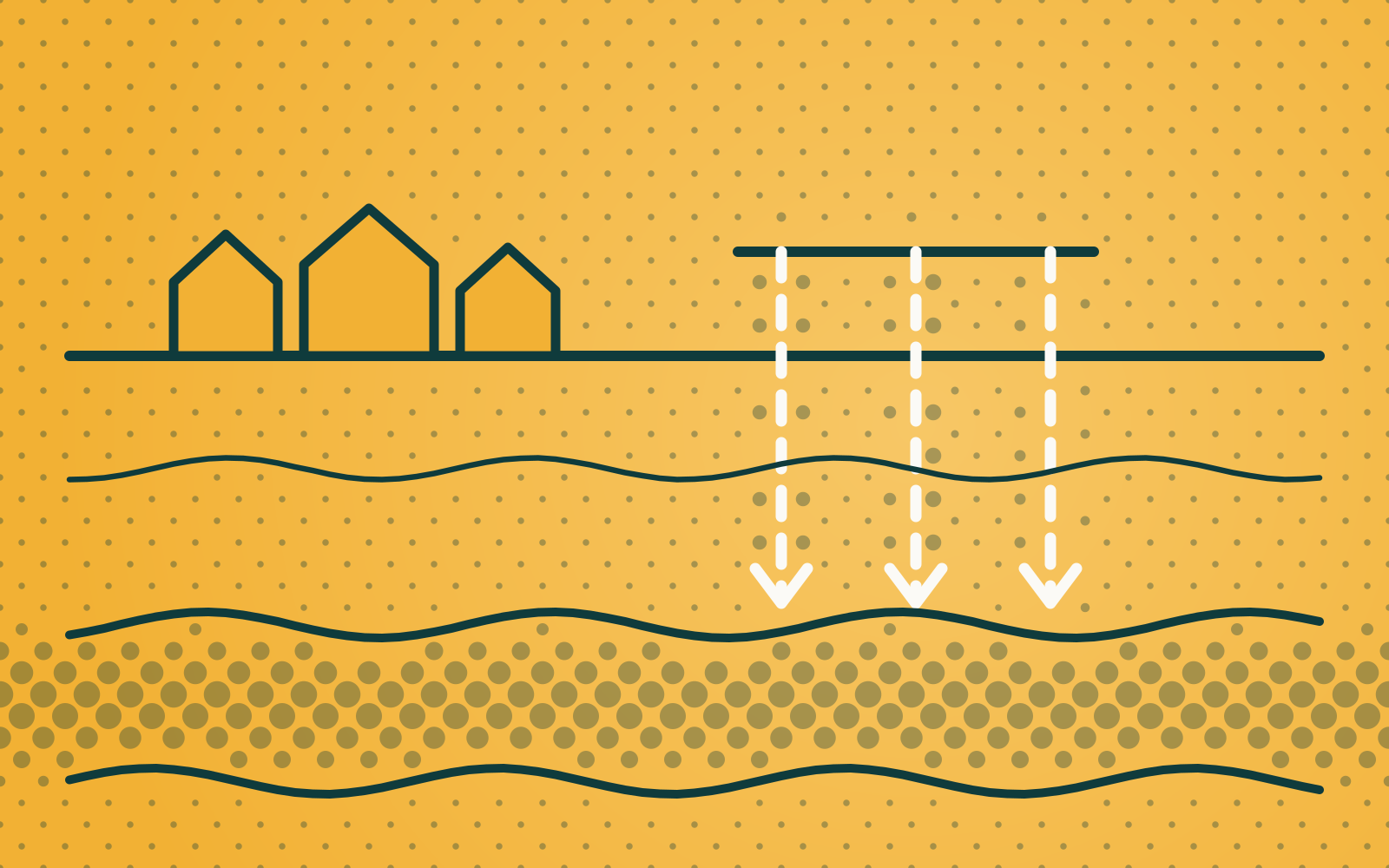
With wells, you can only draw water so long from them before they go dry. This is becoming a major crisis around the world in what is scientifically known as land subsidence, where entire cities and regions are sinking as water is removed from beneath us.
With HydroGrameen technology, we can replenish depleted aquifers while simultaneously purifying polluted water from rivers like the Buriganga. This ensures that we have the clean water needed in perpetuity for life to flourish.
Other, related research the Institute has been doing - and I am grateful to be involved in - includes the development of the foundations of a green agro-economy here in Bangladesh.
Through fast-growing, high-biomass crops like hemp, we can develop the feedstock for Bangladesh to grow the fiber it needs for its textile industry. Instead of paying billions to import cotton, this would bring those resources to rural Bangladesh instead.
Hemp textiles have many natural colors, absorb dyes better, and require less chemical treatments - three factors that would greatly reduce the #1 source of pollution of the Buriganga River, which are chemicals from textile factories.
Hemp is also the best carbon sequestering crop on the planet, making it vital in the fight against climate change. Through developing hemp biofuels, Bangladesh can grow a green alternative to fossil fuels, reduce air pollution, and save billions every year on import costs by reducing fossil fuel dependency.
Through the ambitious vision of HydroGrameen, Dr. Ghosh and his team of ecologists are seeking to lend our scientific expertise to support and strengthen the government's ambitious Mujib Climate Prosperity Plan.
But it's important to remember that cleaning up the Buriganga River is not just about the environment - it is also about politics and economics.
We must challenge the neo-colonial exploitation whereby powerful American and European fashion companies get to export their pollution to the Buriganga River, while importing textiles at below their true value.
Through his Institute, Dr. Ghosh has forged people to people ties between environmentalists here in Bangladesh and in the United States. It is my hope that we can continue to grow these ties of scientific exchange and collaboration.
By taking up the mantle of this scientific revolution, Bangladesh - one of the most climate vulnerable countries in the world - could fulfill its enormous potential as a climate leader for all of humanity.
All ecological signs point to how little time we have left to restore the balance of nature. We must honor and uplift the political integrity and scientific expertise of leaders such as Dr. Ghosh before it is too late.
With four decades of leadership in scientific research, environmental remediation, government service, and boldly standing for truth and justice, Dr. Ghosh's work today represents the culmination of a lifetime of service to the people and the planet.
Thank you for your time and your attention.