A Letter from Dr. Ghosh to Glenn Seaborg
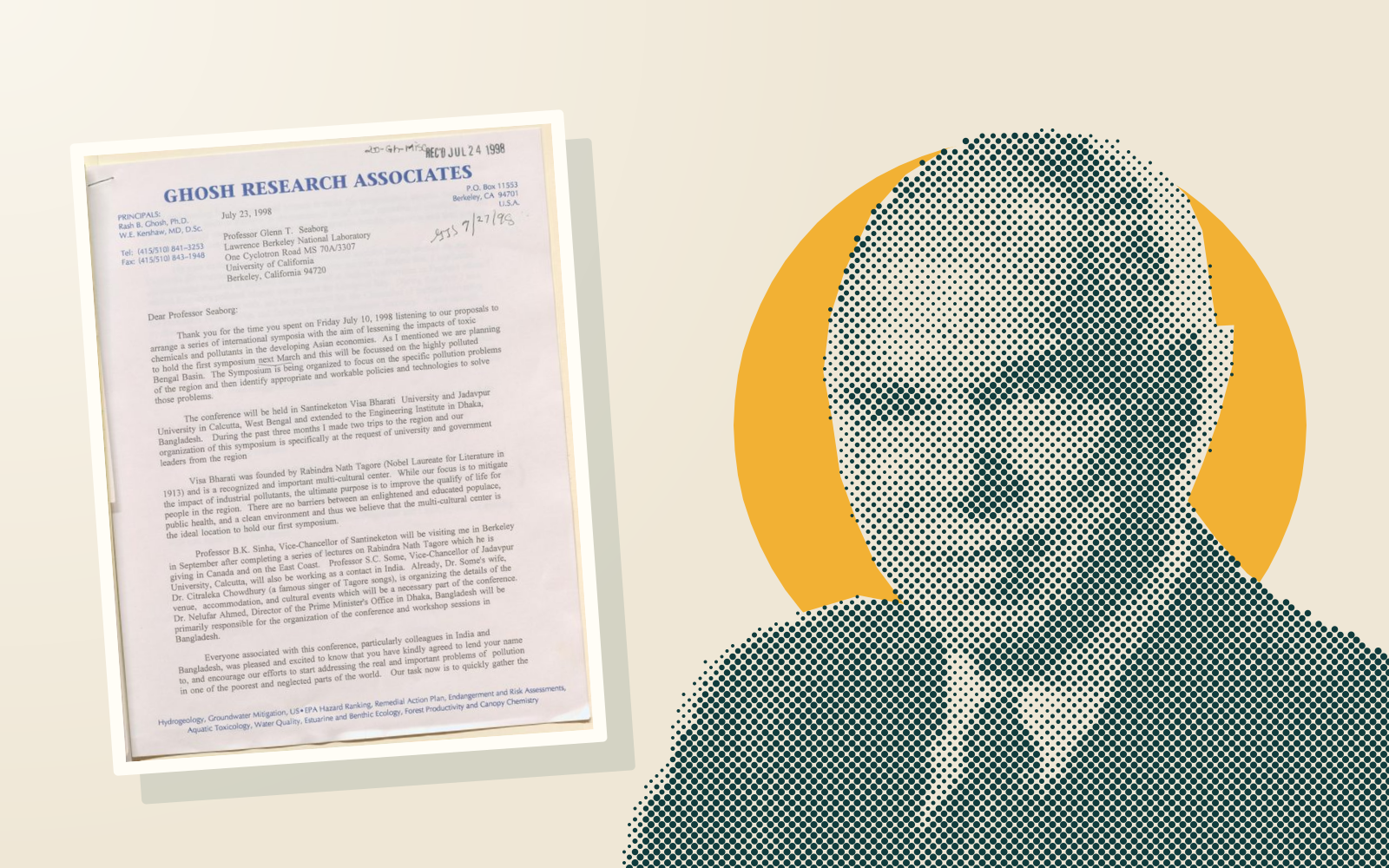
The Library of Congress preserves a founding document of IIBHB’s mission: a letter from Dr. Rash B. Ghosh to Glenn T. Seaborg, dated July 23, 1998. It bears witness to the Nobel laureate’s close involvement in the institute’s formative days and to a shared commitment to put science to work for communities facing polluted water.
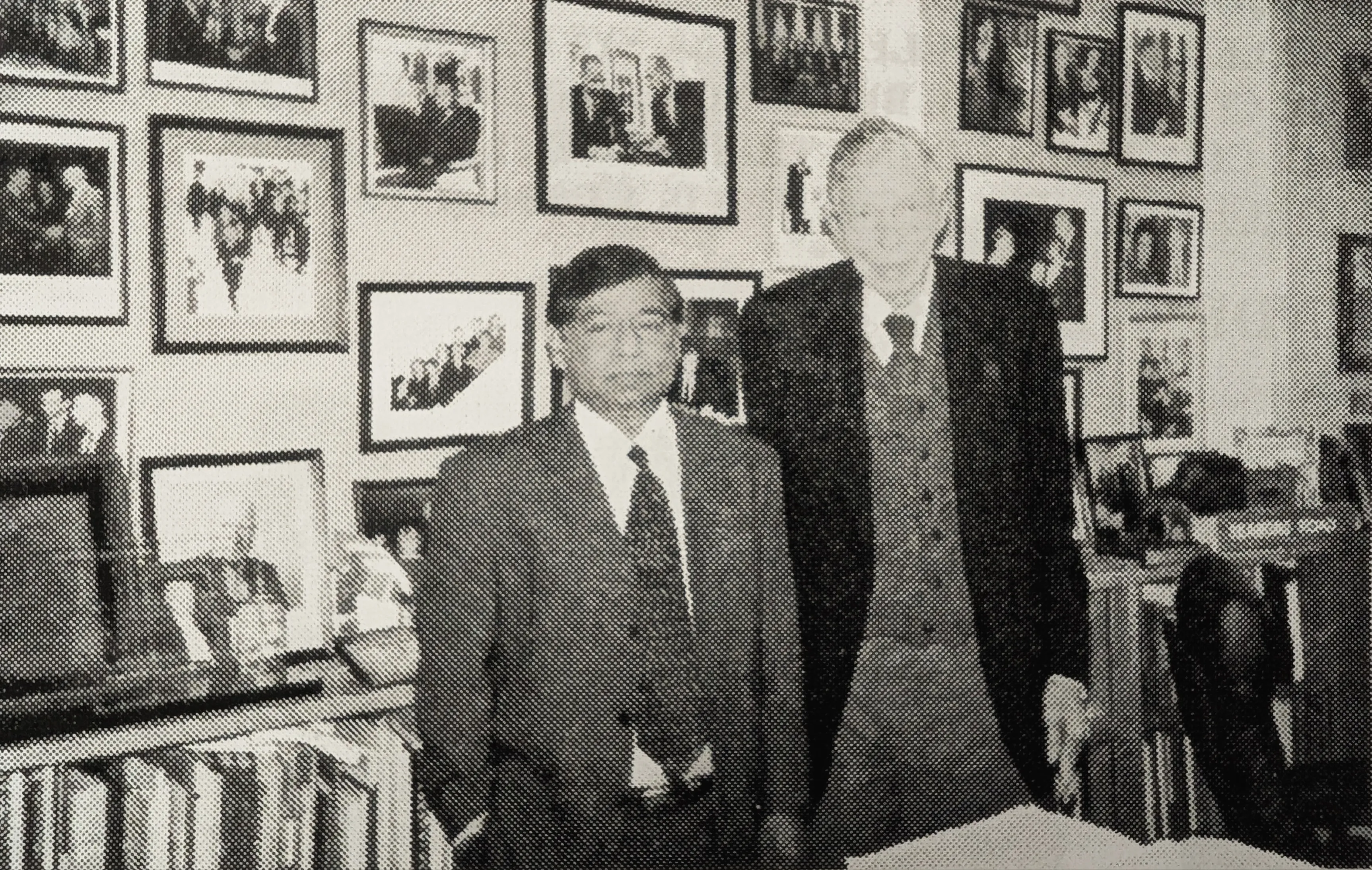
Ghosh and Seaborg met in Berkeley on July 10, 1998, to discuss bringing together a series of international symposia on reducing the impact of toxic chemicals and pollutants. The first symposium focused on the Bengal Basin in March 1999. Seaborg encouraged Ghosh to press forward with an organized effort to protect the region’s water and public health. He agreed to lend his name to the initiative, placing his scientific standing behind Ghosh’s plan for international action on pollution. The task ahead was to assemble the expertise and funding to turn that commitment into practical work in India and Bangladesh.
The gathering connected Visva-Bharati at Santiniketan, Jadavpur University in Calcutta, and an engineering institute in Dhaka. Visva-Bharati was founded by Rabindranath Tagore, the Bengali poet and educator who received the 1913 Nobel Prize in Literature. Tagore’s university was a fitting setting for a project that treated education, culture, public health, and environmental protection as inseparable. The goal of the symposium was to identify workable policies and technologies, followed by training to put them into practice.
The need for that cooperation was urgent then and continues today. Arsenic was detected in Bangladesh’s tube-well drinking water in 1993. As the scale of the groundwater crisis came into view, Dr. Ghosh began organizing an international response to the region’s pollution problems.
Ghosh set a clear standard for the work ahead:
Success will be measured by positive changes in environmental policies and reduction of pollution.
IIBHB emerged from this foundational collaboration between Dr. Rash B. Ghosh and Nobel laureates Glenn T. Seaborg and Charles H. Townes. Their emphasis on international collaboration and education remains central to the institute’s work today.
We are grateful to David Seaborg, Glenn’s son, for his continued involvement with IIBHB and for helping carry this commitment across generations.
Read the complete letter — original two-page PDF, 4.8 MB
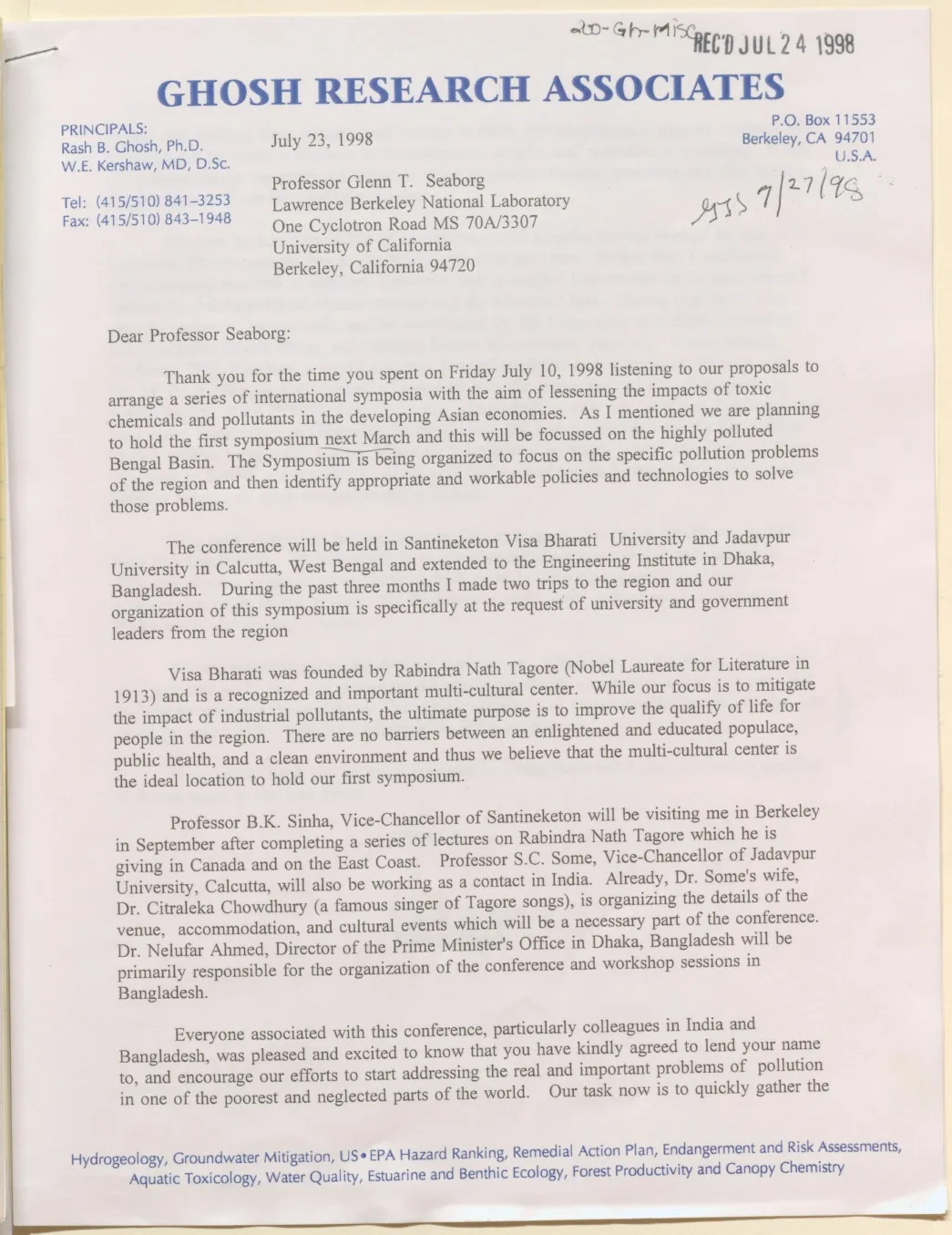
Archival citation: Rash B. Ghosh to Glenn T. Seaborg, July 23, 1998. Box 292, Glenn T. Seaborg Papers, Manuscript Division, Library of Congress, Washington, D.C. Scan supplied courtesy of the Library of Congress. Collection finding aid.
Portrait: Glenn T. Seaborg, 1964. U.S. Atomic Energy Commission, via the National Archives; public domain. Original photograph.